Will extending maternity leave raise the "invisible threshold" of employment?
Investigation motive
Since the 13th the National People’s Congress Standing Committee (NPCSC) adopted the decision on amending the population and family planning law in August this year, various localities have successively started the revision of local population and family planning regulations and intensively introduced measures to encourage birth.
Recently, Beijing, Shanghai, Zhejiang, Chongqing, Qinghai, Hebei, Anhui and other places have intensively revised family planning regulations. Many provinces have extended maternity leave from 30 days to 60 days on the basis of enjoying the 98 days stipulated by the state, and some provinces have extended it to 90 days, and increased parental leave.
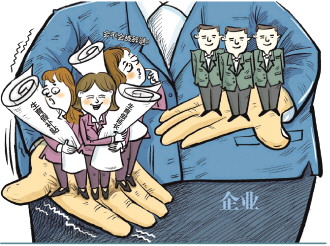
The measures to extend maternity leave have aroused heated discussion in society, including whether it is reasonable for enterprises to bear all maternity leave subsidies, why there is a big gap between men and women in the length of leave, and whether extending maternity leave will raise the "invisible threshold" for women’s employment. Around these problems, the reporter of Rule of Law Daily recently conducted an investigation and interview.
● If all the costs of extending maternity leave are borne by enterprises, it will increase the burden on enterprises too much, which will affect the promotion of women’s employment to a certain extent.
● Increase and guarantee male paternity leave and parental leave, or we can expect this to promote women’s employment and improve women’s situation in the labor market.
● As far as the implementation of maternity leave is concerned, it is the core to properly balance the interests of employees and enterprises, and various supporting safeguard measures are still needed.
□ rule of law daily trainee reporter Sun Tianjiao
□ Rule of Law Daily reporter Chen Lei
Seeing the recent policy of extending maternity leave in various places, Mai Xiaomin’s first reaction was "Will it be more difficult to find a job?"? Because in her view, the extension of maternity leave means that female employees may bring greater "burden" to the company.
"Now every interview, talk about yourself ‘ Married and childless ’ When you are, you will feel a little uneasy. " Mai Xiaomin, who lives in Dongcheng District, Beijing, talked about his recent job hunting experience, and his tone was full of helplessness. "It seems that I want to add ‘ I have no plans to have children within two years ’ In order to dispel each other’s concerns, I can think about it again. Why? "
There are quite a few women in the workplace who share the same concerns as Mai Xiaomin. Recently, Beijing, Shanghai, Zhejiang and other places have intensively revised the family planning regulations. Many provinces have extended maternity leave from 30 days to 60 days on the basis of enjoying the 98 days stipulated by the state, and some provinces have extended it to 90 days, and increased parental leave. The reporter of Rule of Law Daily interviewed a number of working women randomly and found that whether extending maternity leave will raise the "invisible threshold" of employment is their common confusion.
Experts interviewed believe that maternity leave, maternity leave, paternity leave, nursing leave and parental leave are all important contents of the maternity leave system and also important rights and interests enjoyed by workers. Extending maternity leave is of great significance to society and families, but at the same time, we can’t ignore a series of problems behind it, such as increasing the employment cost of enterprises and aggravating the discrimination of women in the workplace. As far as the implementation of maternity leave is concerned, it is the core to properly balance the interests of employees and enterprises, and various supporting measures are still needed to make maternity benefits truly land.
Extending maternity leave worries women.
Or make it harder for women to find jobs.
Wang Ying, 26, is looking for a job. Recently, she was repeatedly asked about her marriage and childbearing plans in the interview field, and even euphemistically asked if she was willing to promise not to have children within three years.
However, the issue of fertility may become a "hurdle" between female employees and companies after women join the company.
"Career or family, this multiple-choice question can sometimes only be chosen by women in the workplace." Liu Pan, who lives in Shenzhen, Guangdong Province, used to be the marketing director of a fashion design education and training company. However, just after she got pregnant, the company that had high hopes for her forced her to leave in various ways.
"In the end, the company only gave me two choices, either choosing to go to work as usual after taking five days of annual leave, or changing jobs, and planning to transfer me to the sales post. The basic salary of the sales post is only 2,500 yuan. They just want to avoid the cost brought to the company after my pregnancy and production. " Liu Pan said that the training company belongs to a small company. She joined the company in the second year of its establishment, and had been with the company for four years when she left her job, from an initial sales consultant to a marketing supervisor in three big cities. Transferring to the sales post is not only a disguised demotion, but also means that the company marginalizes it.
Desperate, Liu Pan resigned himself, unwilling to pester him any more.
When Ms. Ai, 31, returned to the company after maternity leave in early June 2020, she never imagined that she would be marginalized in the workplace. Not only have several hot projects that I am responsible for been transferred to others, but I also have to endure the cynicism of the leaders. "Leaders always say, intentionally or unintentionally, that after such a long vacation, what’s the difference between coming back or not? His attitude has influenced the attitude of other colleagues towards me to a certain extent. " Ms. Ai, who is facing the dilemma of the workplace, said painfully.
Mr. HR Jia of an Internet company in Beijing told the reporter: "Female employees are inherently weaker than men in the choice of company employees because of maternity leave. Now with the extension of maternity leave, this situation may intensify. "
"Especially in highly competitive industries, if a female employee is absent from work for more than three months because of maternity leave, she is likely to be abandoned by the company. Therefore, many employees either return to work immediately without taking enough maternity leave, or may be transferred or resigned for various reasons. " Mr. Jia said.
Zhang Cuiling, a researcher at the Center for Population and Development Studies in China, said that it is generally believed that extending the maternity leave time of women can enhance the fertility desire, thus achieving the purpose of increasing the fertility rate. But from the long-term effect, the extension of maternity leave has a "double-edged sword" effect.
"The negative consequences of prolonged maternity leave on the development of women’s society cannot be ignored. The long maternity leave increases the cost of labor use, which is bound to further aggravate the anxiety of enterprises and institutions to hire female employees and make the situation of women who are already at an employment disadvantage even more difficult." Zhang Cuiling said.
Pei Mengjiao, who works for HR in a private technology company in Yuncheng, Shanxi, said that although the competitiveness of her city is relatively small and the gender discrimination against female employees is not so serious, the extension of maternity leave is bound to bring greater employment costs to the company.
"After the maternity leave is extended for 30 days, for our company, it not only means the lack of manpower, but also means another month’s salary subsidy. Therefore, after learning about the policy of extending maternity leave for 30 days, we immediately sorted out the existing employees who have given birth, who may have fertility conditions, and those who do not have such conditions at present, and also docked information with the departments of employees who may have maternity leave and maternity leave applications, so that all departments can make corresponding work arrangements in advance. " Yan Mengjiao said.
The "three-phase" equity cases increased significantly.
The burden on enterprises needs to be balanced.
In an interview with reporters, Mr. Jia euphemistically said that although the company usually does not explicitly restrict gender and fertility in the written conditions when recruiting, in fact, these are the key considerations when selecting candidates later. "Under the same conditions, the priority of men is far greater than that of women, and the priority of married women is greater than that of unmarried women."
It is worth noting that it is not uncommon for employees and enterprises to go to court because of the maternity leave system.
In March this year, the Guangzhou Intermediate People’s Court held a press conference on "Typical Cases of Protecting the Rights and Interests of Female Workers". According to Chen Dongmei, a member of the Judicial Committee of Guangzhou Intermediate People’s Court and a second-class senior judge, the total number of cases concerning women workers’ rights and interests has decreased slightly in the past two years, but the number of cases involving women workers’ rights and interests in pregnancy, childbirth and lactation has increased significantly. According to statistics, from 2019 to 2020, Guangzhou Intermediate People’s Court accepted a total of 345 lawsuits filed for the "three-phase" treatment, accounting for 11.23% of the total number of female employee cases, an increase of 194 cases.
From the appeal of the case, the rights and interests of female employees are mainly manifested as follows: some employers refuse to pay wages or terminate the contract on the grounds of absenteeism due to the labor check-up, or terminate the labor relationship on the grounds that female employees cannot provide labor normally during maternity leave; Some employers reduce the wages of female employees during pregnancy and maternity leave without sufficient basis; Some employers adjust the working place of female employees during breastfeeding without consultation; Some employers fail to purchase maternity insurance for female employees according to law.
Deng Li, an associate researcher at the Institute of Law of the Chinese Academy of Social Sciences and deputy secretary-general of the Center for Gender and Law Studies, mentioned that under the current economic and social conditions, maternity leave subsidies are bound to bring some problems: First, whether enterprises have the motivation and can accept these costs is related to whether employees can actually enjoy maternity leave and whether they will be discriminated against in the workplace because of their maternity needs; Second, the enterprise itself has the ability to bear these costs, which is related to whether the economic rights and interests of employees during maternity leave can be truly implemented.
Zhang Cuiling told reporters that China’s maternity leave system is currently in the mode of "national statutory maternity leave+local extended leave". The regulations on the payment of maternity allowance during the national statutory 98-day maternity leave are relatively clear, and the controversial part is the extension of maternity leave in local areas. The source of funds for the payment of maternity allowance for parental leave and paternity leave is not clear enough. At present, most provincial regulations generally stipulate that it should be paid by employers. If the cost of extending maternity leave and adding parental leave is still borne by employees and employers, it will inevitably intensify the contradiction between enterprises and employees, especially female employees.
"The policy of inviting enterprises to pay the bill can not only improve the enthusiasm of enterprises to encourage childbearing, but also cause enterprises to deliberately avoid the reality of women of childbearing age when hiring and recruiting. Only when the government finances effectively share part of the birth cost and compensate the employment cost of enterprises in addition to reducing taxes and fees, can enterprises be willing to cooperate with the implementation of this policy. " Zhang Cuiling said.
For example, Su Wenwei, a member of the Labor and Social Security Law Committee of the National Lawyers Association and a lawyer in deheng law offices, said that from the current situation of maternity leave in various places, during the maternity leave and maternity leave of female employees, the legal provisions exempt workers from the obligation to provide labor, but they do not reduce the employer’s obligation to perform labor relations. On the contrary, they make stricter regulations on the right to dissolve and change labor contracts. "In extending the maternity leave, we should take into account the interests of society, enterprises, employees and other parties at the same time. If all the costs brought by extending maternity leave are borne by enterprises, it will increase the burden on enterprises too much, which will have an impact on promoting women’s employment to a certain extent."
There is a big difference between male and female maternity leave.
Male family role can not be ignored.
Judging from the existing policies and regulations, the difference between men and women in the length of maternity-related holidays is undoubtedly huge.
Taking Beijing as an example, after the revision of the Regulations on Population and Family Planning in Beijing, it is clear that women can enjoy extended maternity leave from 30 days to 60 days in addition to the 98-day normal maternity leave stipulated by the state. At the same time, with the consent of the organs, enterprises, institutions, social organizations and other organizations, the woman can increase her holiday by one to three months.
In other words, in Beijing, a woman can take at least 158 days off for childbirth. Correspondingly, men only have 15 days of paternity leave.
As a novice mother, Liu Pan complained about the huge gap between male and female maternity leave: "During the more than one year from my pregnancy to giving birth, my husband only took 15 days of paternity leave, which was not enough for him to accompany me or take care of the children. If men’s maternity leave can be extended appropriately, will gender discrimination in the workplace be better? "
In Deng Li’s view, women have to bear great burdens and adapt to great changes in body and mind in the process of bearing children. If they can have more holidays, they can cope with this challenge more calmly and take care of newborns more carefully. If men can share their holidays to a certain extent and take more responsibility for caring for their female partners and newborns in a specific period, it will help to share the pressure and challenges of childbirth and build a more reasonable and harmonious family relationship and gender relationship.
On this issue, Zhang Cuiling introduced the relevant international experience of the maternity leave system for men and women: the types of maternity leave have experienced maternity leave dominated by women, parental leave shared by parents and paternity leave that must be enjoyed by fathers, which gradually promoted the equal sharing of parenting responsibilities within the family and the joint parenting of parents.
"In order to improve the father’s vacation rate and the actual effect of vacation, the Nordic countries have also formulated many supporting policies. On the one hand, a more generous policy is adopted for fathers on vacation in terms of economic subsidies; On the other hand, the Nordic countries also cultivate their fathers to be skilled in caring for babies by adjusting their parental leave. " Zhang Cuiling said.
Recently, the establishment of parental leave system in various places has also strengthened the concern about the responsibilities of newborn fathers in housework and raising infants. For example, Shanghai stipulates that both men and women enjoy parental leave, Jiangxi adds 30 days of male nursing leave, and Tianjin clarifies that men enjoy 15 days of paternity leave … …
The newly revised "Regulations on Population and Family Planning in Beijing" proposes that each husband and wife can enjoy five working days of parental leave every year before their children reach the age of three. What is more humane is that both husband and wife can adjust the distribution of extended maternity leave and parental leave with the consent of their employers.
According to Wu Ya, deputy director of the Population Monitoring and Family Development Department of the Beijing Municipal Health and Health Commission, the 60-day maternity leave extended by the woman for the first time can be enjoyed by the man under the condition that the corresponding number of days is voluntarily reduced, so that men can actively participate in family parenting, undertake family parenting responsibilities and reduce the burden on women.
In this regard, Zhang Cuiling commented that China’s current maternity leave system has gradually confirmed paternity leave and parental leave through legislation to clarify men’s family responsibilities in caring for their wives and raising infants, and to support employees to balance work and family relations, which may be expected to promote women’s employment and improve women’s situation in the labor market.
growParenting and landing require multi-party efforts.
Jointly optimize the birth policy environment.
Then, what other supporting policies need to keep up with the further implementation of the maternity leave system in the future?
In Su Wenwei’s view, in order to cope with the aging population, it is an inevitable measure to increase the fertility rate of the childbearing age population. Extending maternity leave and increasing parental leave are all incentives to encourage fertility. As far as the implementation of maternity leave is concerned, it is the core to properly balance the interests of employees and enterprises.
She mentioned that it is clear that the allowance for maternity leave is paid by the maternity fund, which reduces the burden on enterprises. "At present, the regulations on this issue are not consistent in various places. I hope that it can be clarified in the next policy formulation, which will play a positive role in reducing the burden on enterprises and reducing the impact of childbirth on women’s employment."
At the same time, Su Wenwei encourages collective consultation. With regard to issues such as holidays, treatment and post adjustment, it is suggested that enterprises should sign special collective contracts for the protection of female employees through collective negotiation in addition to perfecting them in legislation. On the basis of determining the bottom line, we should formulate policies from the standpoint of both sides of labor relations to minimize the pressure on enterprises from the management cost and capital cost.
Zhang Cuiling believes that the good landing of maternity leave, the improvement of women’s employment environment and the protection of workplace rights and interests depend on the joint efforts of many parties.
She analyzed that it is first necessary to explore the establishment of a scientific multi-party sharing mechanism for reproductive costs. We can learn from the sharing methods of maternity costs in developed countries, introduce relevant financial subsidies and tax relief measures, actively bear part of the labor costs of enterprises, and reduce the burden of employers and the concerns of hiring female employees.
"You can implement the maternity subsidy policy for enterprises, and use tax relief to link the number of female employees employed, the number of employees born with children in that year, and the number of maternity leave days with tax incentives to create ‘ Fertility-friendly Social Responsibility Community ’ ; Learn from the practice in Beijing, promote the sharing of maternity leave between husband and wife in various places, and determine the number of vacation days for each type of holiday through consultation between husband and wife, promote the sharing of family responsibilities, and ensure a fair and balanced burden on enterprises. " Zhang Cuiling said.
In addition, Zhang Cuiling suggested strengthening the protection of workers’ "Phase III" labor disputes and providing legal support to the injured party in illegal cases. Improve relevant laws and regulations to make them more operable; Labor arbitration institutions should be in accordance with the relevant labor disputes in matter of justice; Further improve the complaint channels, improve the rights protection mechanism, increase supervision and punishment, and form a guiding, educating and warning role for employers.
"The reform and improvement of the maternity leave system is an important part of the construction of China’s fertility-friendly society and policy system, involving the adjustment of multi-subject and multi-layer interests. The reform will have a far-reaching impact on maternal and child health, employment security, enterprise costs, population structure, etc. It also depends on the whole society to jointly optimize the policy environment supporting fertility and form a policy synergy." Zhang Cuiling said.
(In the text, Mai Xiaomin, Wang Ying and Liu Panjun are all pseudonyms/Gao Yue)